
08 | History of Glass: A History of Glass Manufacturing in Japan, Part 1
Hello! April is already over, and one-third of the year has passed. Is everyone enjoying new challenges this year?
It's not too late to start now. Let's begin right away! ♪
The oldest glass discovered in Japan is a decorative object called a heki, excavated from a Yayoi period ruin in Chikushi District, Fukuoka Prefecture. It's a disc-shaped glass with a round hole in the center. This glass was not made in Japan; it's believed that the glass technology of Constantinople traveled all the way through the Silk Road to China and Korea, or arrived in Japan via northern routes or southern sea routes. The Silk Road was also a Glass Road.
At the Shōsōin in Nara, because they are handed-down artifacts rather than excavated items, the original brilliance of the glass has not been lost, and they have been preserved in perfect condition to this day. These are rare and valuable glass pieces, globally significant alongside those in St. Mark's Basilica in Italy.


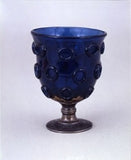
In addition to many glass beads, the Shōsōin also preserves a document describing what is likely the world's oldest glass recipe. It's believed that glass beads, other than glass vessels, were manufactured in Japan at that time.
Unfortunately, it is not clear exactly when glass manufacturing began in Japan, but it is thought to have been during the Asuka and Nara periods. In the Heian period, due to changes in customs, the production of glass beads stagnated, and glass manufacturing ceased for about 600 years, becoming a blank period.
Leave a comment